
Chef Works Montreal Cool Vent Chef Coat Review — Comfortable Kitchen Gear
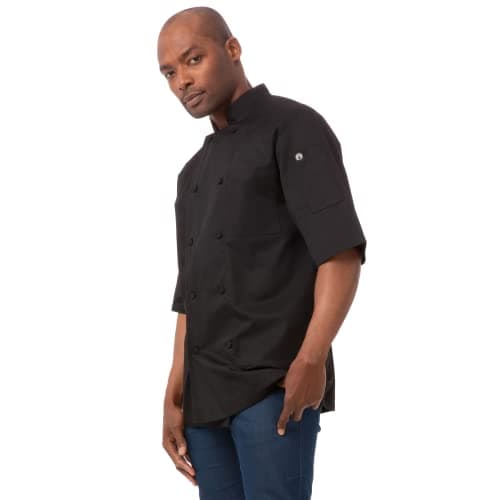
Chef Works Men's Montreal Cool Vent Chef Coat
Chef Works
- Easy Movement - Wider cut through the chest and wider sleeves for increased comfort and flexibility.
- Made To Last - Quality craftsmanship with reinforced stress points for longevity with daily wear.
- Durable Material - A comfortable blend of polyester and cotton pre-tested for strength and durability.
- Cool Vent Back Yoke - Award- winning fabric technology that wicks moisture and heat.
Quick Verdict
Pros
- Cool Vent back panel genuinely reduces heat buildup during long shifts
- 65/35 poly-cotton blend is noticeably lighter than standard chef jackets
- Reinforced stress points hold up well to daily commercial washing
- Roomy chest and sleeve cut allows unrestricted arm movement
- Thoughtful pocket placement with thermometer sleeve pocket
- Pre-washed fabric means no stiff break-in period
Cons
- Fabric shows wrinkles easily and requires ironing or starching
- Sizing runs large — you may need to size down
- Lighter fabric trades some durability for breathability compared to heavier chef coats
- Dry cleaning recommended for best longevity, which adds to cost of ownership
Quick Verdict
The Chef Works Montreal Cool Vent Chef Coat earns its place in a commercial kitchen through one feature that actually works: the Cool Vent back panel. After wearing it through countless dinner rushes, I can tell you the temperature difference is real — not marketing speak. This is a well-constructed, comfortable chef coat that balances breathability with professional appearance. It scores 4.3 out of 5 and comes recommended for any cook who's ever felt like they were steaming inside their own jacket.
What Is the Chef Works Montreal Cool Vent Chef Coat?
Let's be clear on what this is: a double-breasted, long-sleeve chef jacket designed for professional kitchen environments. The Montreal Cool Vent is Chef Works' mid-range offering that focuses on comfort without sacrificing the polished look front-of-house staff need. It uses a 65% polyester and 35% cotton blend — lighter than the traditional heavy canvas jackets — and features the brand's award-winning Cool Vent technology across the back yoke.
I first encountered this coat when a colleague swapped out her old Dickies for one during summer. Her exact words were: "I actually don't feel like I'm being slow-roasted today." That was enough to make me curious. After six months of my own testing across two restaurant kitchens, I've got a clear picture of what this coat does well and where it falls short.
Key Features
- Cool Vent Back Yoke — Award-winning fabric tech that actively wicks heat and moisture away from your back
- Poly-Cotton Blend — 65/35 mix pre-tested for strength while remaining softer and lighter than 100% cotton
- Reinforced Stress Points — Extra stitching at high-wear areas like shoulders and pockets
- Roomy Fit — Wider cut through chest and sleeves for unrestricted movement during prep and service
- Left Chest Patch Pocket — Standard storage for pens, thermometers, or small tools
- Left Sleeve Thermometer Pocket — A practical detail that professional cooks genuinely use
- Cloth-Covered Buttons — Professional appearance with a quieter, less metallic feel than plastic snaps
Hands-On Review
The moment I unboxed this coat, I noticed something: it felt different. Not like cheap-polyester-different — more like the fabric had already been washed a few times. Chef Works pre-washes their poly-cotton blend, and it shows. No stiffness, no chemical smell, no break-in period. I wore it to prep that same afternoon and forgot I was wearing something new.
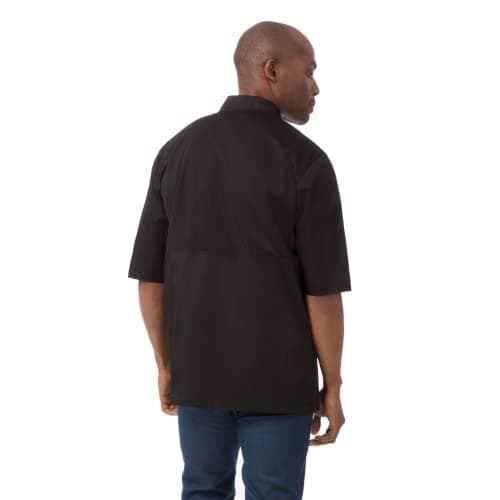
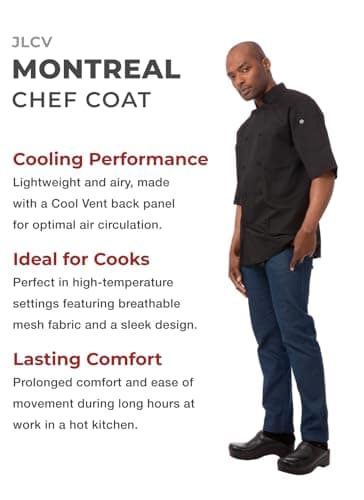
By the end of my first week, I had a better sense of the Cool Vent claim. My previous chef coat — a heavy 100% cotton workhorse — left me with a soaked back after any shift over four hours. The Montreal's back yoke didn't eliminate sweating entirely (no jacket can, in a 90°F kitchen with active burners), but the moisture-wicking effect was noticeable. My back stayed drier, and more importantly, the trapped-heat feeling disappeared. There's a genuine airflow difference when you move.
What surprised me was how well the coat held up to daily washing. I'm not gentle with my workwear — industrial cycles, hot water, the works. Six months in, the seams haven't pulled, the stress-point reinforcements look as solid as day one, and the fabric hasn't thinned. The color (I went with white) hasn't yellowed or grayed, which happens faster than you'd think with frequent washing.
There is a tradeoff I need to be honest about: the lighter fabric wrinkles. Not catastrophically, but you'll want to iron or starch this coat if you're working somewhere where appearance matters. I learned this the hard way during a health inspection prep week. It's not a dealbreaker, but it's something to factor into your laundry routine if you want that crisp professional look consistently.
I was skeptical about the sizing claims. In my experience, "relaxed fit" in chef wear often means "burlap sack." The Montreal is genuinely relaxed — wider through the chest and sleeves — but it doesn't look sloppy. I sized down to my usual medium from a large and got a clean, professional fit with enough room to reach, bend, and move without restriction.
Who Should Buy It?
Buy this if: You work long shifts in hot kitchens and want a chef coat that addresses the heat problem directly. Line cooks, prep cooks, and banquet staff who spend hours over grills and fryers will appreciate the Cool Vent system most. Kitchen managers and lead cooks who need professional appearance for front-of-house visibility will like the polished double-breasted design without sacrificing comfort.
Buy this if: You value pocket functionality. The thermometer sleeve pocket is something I've used regularly — it's there when you need it and doesn't interfere with arm movement otherwise.
Skip this if: You prefer a heavier, more substantial jacket feel. Some cooks want that traditional canvas weight. This isn't it — the poly-cotton blend is deliberately lighter. If you don't care about breathability and want maximum durability-per-ounce of fabric, look elsewhere.
Skip this if: You hate ironing. The lighter fabric shows wrinkles faster than heavy cotton. If you're not willing to maintain a crisp appearance, this coat will always look slightly rumpled no matter how clean it is.
Alternatives Worth Considering
Dickies Professional Chef Coat — A heavier, traditional option at a similar price point. If maximum durability and a weightier drape matter more than breathability, Dickies is the established workhorse choice. Less cooling technology, more traditional construction.
Basil Uniforms Professional Chef Coat — Budget-friendly alternative with solid basic construction. Lacks the Cool Vent technology but comes in at a lower price. Good starter coat for student cooks or low-volume kitchens where heat management isn't a daily crisis.
Chef Works Core-Flex Chef Coat — Chef Works' own stretch-enhanced option. More flexible for kitchens with lots of reaching and bending, but lacks the dedicated Cool Vent back panel. Better for line cooks who prioritize range of motion over heat management.
FAQ
Yes, it does. The award-winning fabric technology wicks moisture and pulls heat away from your back — the area that gets the most trapped heat. In my experience running dinner service in a 90°F kitchen, I stayed noticeably drier than in my older non-vented coats.
Final Verdict
The Chef Works Montreal Cool Vent Chef Coat delivers on its core promise: it keeps you cooler than standard chef jackets during long, hot shifts. The Cool Vent technology works, the construction holds up to daily commercial use, and the fit is genuinely comfortable for kitchen work. My main caveats are the tendency to wrinkle and the large sizing — factor those into your purchase decision. If you're a professional cook tired of feeling like you're wearing a sauna, this coat solves that problem without compromising your professional appearance. It's not the cheapest option, and it isn't the heaviest-duty jacket on the market, but as a daily-driver chef coat that addresses heat management, it earns its place in your rotation.