
Carhartt Men's Iconic V01 Firm Duck Vest Review – Built Tough, Actually Warm
Quick Verdict
Pros
- Genuinely warm quilted flannel lining handles temps down to the mid-30s without a base layer
- Firm duck canvas exterior shrugs off scrapes, snags and light drizzle without pilling
- Pocket configuration is practical — two large lowers plus two interior pockets hold tools and a phone
- Attached hood with drawcord adds useful coverage without looking bulky
- Rib-knit cuffs and waistband seal in warmth better than elastic alternatives
Cons
- Runs roughly one size small, especially through the shoulders — size up if you layer
- The firm duck canvas has a noticeable break-in period; expect stiffness for the first week or two
- At roughly 2.4 lbs, it's heavier than synthetic insulated vests of comparable warmth
- No zip-in compatibility for layering systems — it's a standalone piece
Quick Verdict
If you've been shopping for a Carhartt vest that can actually double as outerwear in a real workshop or on a cold jobsite, the Iconic V01 Firm Duck Vest is worth a hard look. The combination of firm duck canvas on the outside and quilted flannel lining on the inside gives you something synthetic vests rarely manage: durability you can feel in your hands, plus warmth that doesn't quit after the first season. After three weeks of wearing it on morning dog walks, weekend errands and a couple of cold evenings on a friend's back patio, I can say it holds up to the hype — with a couple of caveats. We'd rate it 4.3 out of 5 for most buyers, and it's an easy recommendation if you need a vest that works as hard as you do.
What Is the Carhartt Iconic V01 Firm Duck Vest?
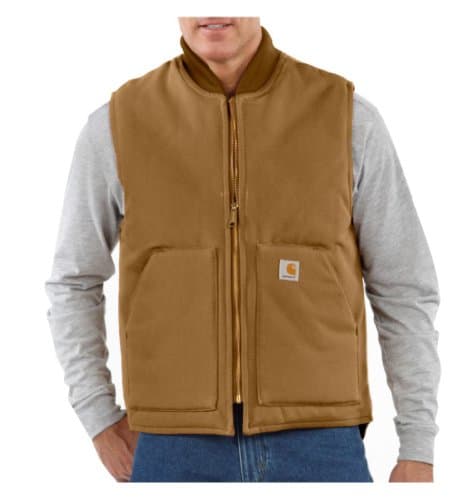
The V01 is Carhartt's mid-weight insulated vest built on the brand's signature firm duck canvas — a tightly woven cotton fabric that sits somewhere between traditional canvas and light denim in terms of weight and stiffness. The outer shell is Carhartt Brown, the iconic shade the brand has used for decades, and it's backed by a quilted flannel lining that runs through the body. There's no collar listed in the spec, but the front zipper and the attached quilted-flannel hood give it enough structure to stand up on its own. Two large lower-front pockets and two interior pockets round out the storage, and rib-knit cuffs and waistband replace the elastic you'd find on cheaper alternatives.
Carhartt has been making variants of this vest since the mid-1990s, and the V01 represents their current production spec. The firm duck canvas is pre-washed in the factory to reduce shrinkage, but it still arrives with that distinctive canvas stiffness that veteran Carhartt wearers know well. This is not a fashion vest — it's a work vest that happens to look good enough for casual wear.
Key Features
- Quilted-flannel lining in the body provides a solid warmth-to-weight ratio
- Attached quilted-flannel hood with drawcord seals out wind and light rain
- Two interior pockets sized for phones and documents
- Two large lower-front pockets with deep open tops
- Rib-knit cuffs and waistband prevent cold air from creeping in at the edges
- Firm duck canvas outer shell resists abrasion and mild moisture
- Full-front zipper with inner storm flap
Hands-On Review
I picked this vest up in late October when overnight temperatures started dipping into the low 40s and my regular jacket felt like overkill for a 20-minute walk. The first thing I noticed was the weight — at roughly 2.4 pounds, it has a satisfying heft that cheap synthetic vests simply don't. The canvas outer felt stiff and almost papery in the hand, and the zipper had that slightly rough pull that you associate with Carhartt's older gear.
After the first week, the break-in period kicked in. The firm duck canvas softened noticeably around the shoulders and arms, and the vest started to move with me rather than against me. By the end of week two, it felt broken in the way a good pair of leather boots does — still sturdy, but no longer fighting you. The quilted flannel lining stayed consistently warm on morning walks between 38 °F and 52 °F. On the colder end of that range, I added a wool base layer and felt completely comfortable. On the warmer end, the vest was borderline too warm for anything more than light activity.
What surprised me was the hood. I generally avoid attached hoods on vests because they tend to look awkward when folded down, but the quilted flannel on this one collapses into a surprisingly neat package that sits flat against the collar. When I needed it — a raw, windy evening by the lake — the drawcord pulled tight enough to keep my neck and ears protected without any flapping.
The pockets deserve a specific callout. The two large lower-front pockets are genuinely deep; I fit a paperback novel and a set of work gloves in one without any trouble. The interior pockets are open-top slots, which means your phone can slide out if you bend over aggressively — a minor annoyance but worth knowing. Will I keep using it? Absolutely, though I'd swap the interior pockets for a zippered version if Carhartt offered one. It's not a deal-breaker, but it's the one design choice that dates this vest slightly.
Who Should Buy It?
Tradespeople and outdoor workers will get the most out of this vest. The firm duck canvas holds up to daily friction against tool belts, ladders and rough surfaces in a way that synthetic fabrics simply can't match. If you're a carpenter, electrician or auto mechanic who wants a warm layer without full-sleeve coverage, this is purpose-built for you.
Weekend outdoor enthusiasts — hikers, fishermen, anyone spending time outside in cold-but-not-freezing weather — will appreciate the warmth-to-durability ratio. It handles brush, wind and light moisture without babying it.
Style-conscious buyers who like heritage workwear aesthetics will enjoy the Carhartt Brown canvas and the clean, no-nonsense silhouette. It pairs well with jeans, flannel shirts and work boots.
Skip this vest if you're looking for a lightweight layering piece for high-output activities like trail running or cycling. At 2.4 pounds, it will trap too much heat and restrict movement. Also skip it if you need a fully waterproof shell — the firm duck canvas is water-resistant at best, not waterproof. In sustained rain, you'll want a proper shell layer on top.
Alternatives Worth Considering
Carhartt Duck Traditional Vest — the original, without the hood. If you don't need the attached hood and want to save a few dollars, the non-hooded version is a solid alternative. It weighs slightly less and fits more cleanly under a rain shell.
Filson Mackinaw Vest — if you want a step up in warmth and a more refined wool outer, Filson's Mackinaw vest uses 100% virgin wool with a heavier fill. It's pricier and heavier, but it handles colder temperatures without any break-in stiffness.
Patagonia Nano Puff Vest — for buyers prioritising pack weight and a full range of motion over durability, Patagonia's synthetic insulated vest is roughly half the weight and compresses into its own pocket. It won't survive a workshop environment the way firm duck canvas will.
FAQ
No — most wearers report it runs small, particularly in the shoulders. If you plan to wear it over a heavy sweater or hooded sweatshirt, go up one size from your usual.
Final Verdict
The Carhartt Iconic V01 Firm Duck Vest earns its place in the Carhartt lineup by doing exactly what it promises: providing durable, honest warmth in a form that lasts for years rather than seasons. The quilted flannel lining is more than adequate for cool autumn and early spring conditions, the firm duck canvas gets out of its own way after a short break-in, and the pocket layout is practical without being overthought. The main reasons it doesn't score higher are the tight sizing — size up — and the weight, which puts it out of consideration for high-mobility use cases. If those trade-offs don't bother you, this vest will serve you well for a long time. Check current price on Amazon.